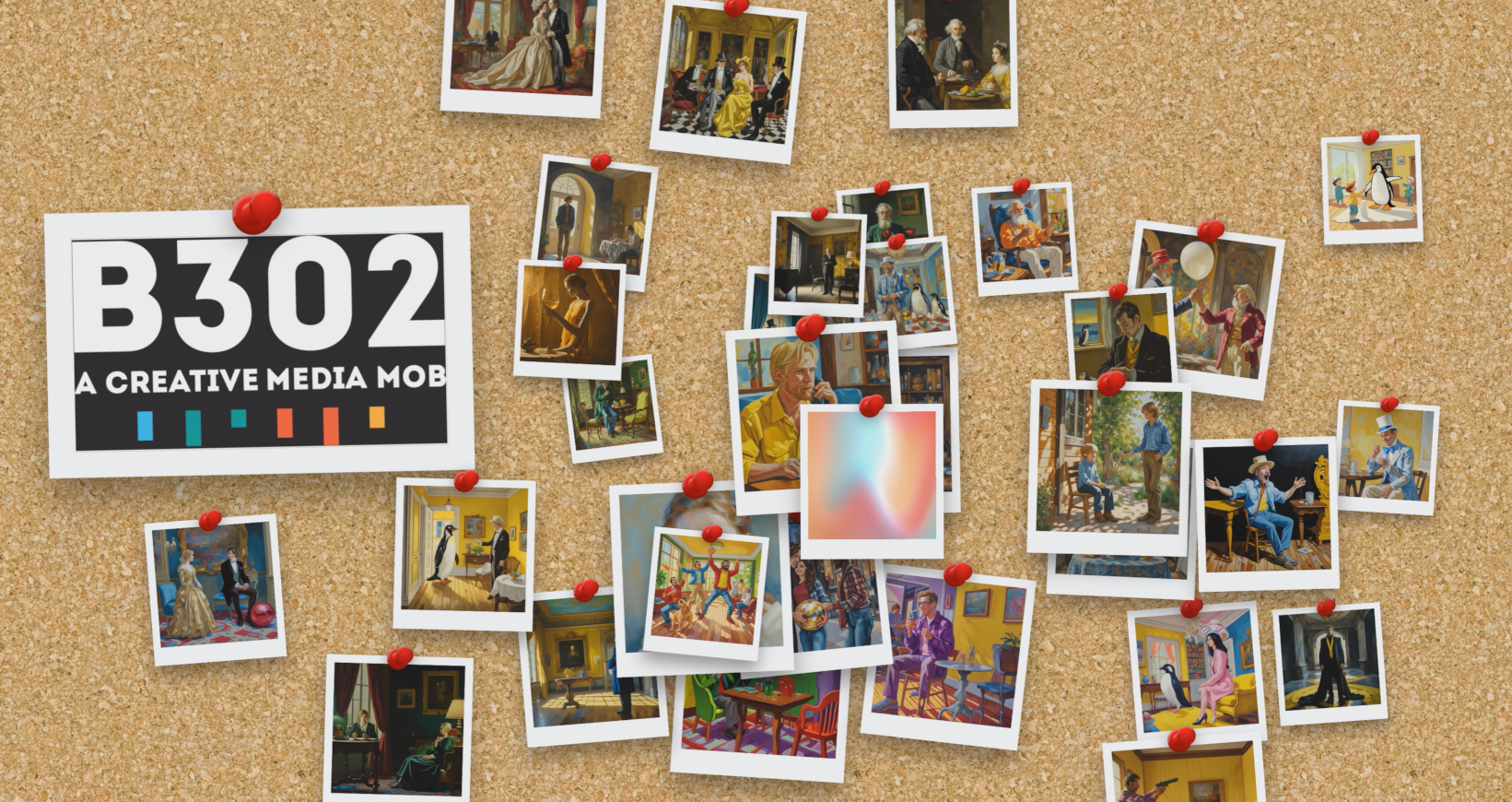
Evolving AI Art Installation
Short version: visitors gave the AI visual inspiration using real-world objects. The system interpreted the objects, atmosphere and composition, then created a new artwork instead of simply transforming the camera image.
The installation running as a shared, zoomable pinboard of generated works.
This project was built for the INNOVATE AI Meetup 2026 – XL Edition, held on 7 April 2026 at Musis Arnhem. The meetup focused on current AI developments and included a mini AI expo where visitors could interact with AI experiments.
My installation was a collaborative canvas between humans and AI. Visitors could place objects in front of a camera, but they were not writing precise prompts. The camera image became input for analysis: recognizable objects, atmosphere, composition, colour and general vibe.
That analysis became inspiration, not an instruction sheet.
Inspiration instead of instructions
Not this
“Turn this exact photo into a painting with these subjects, colours and style.”
This
“Here is a stimulus. Interpret it, decide what matters, and create something new from that context.”
The AI had significant creative freedom. The original photo was not meant to be preserved, traced or converted directly. Two visitors could provide similar objects and still receive completely different interpretations, because the system treated the input as a creative starting point.
How the installation worked
Visitors physically arranged inspiration in front of the webcam.
The capture screen posted webcam frames to the local server.
A webhook chain moved the image through analysis and generation steps.
The AI interpreted the context and produced a new artwork.
The implementation around the process was intentionally direct: a capture interface, a Node/Express server, an n8n workflow, local AI models, ComfyUI for image generation, and a large digital pinboard for the results.
The source code for the installation is available at github.com/jurrebuunk/innovate-b302-2026. The main implementation lives in server.js, public/capture.js and public/app.js.
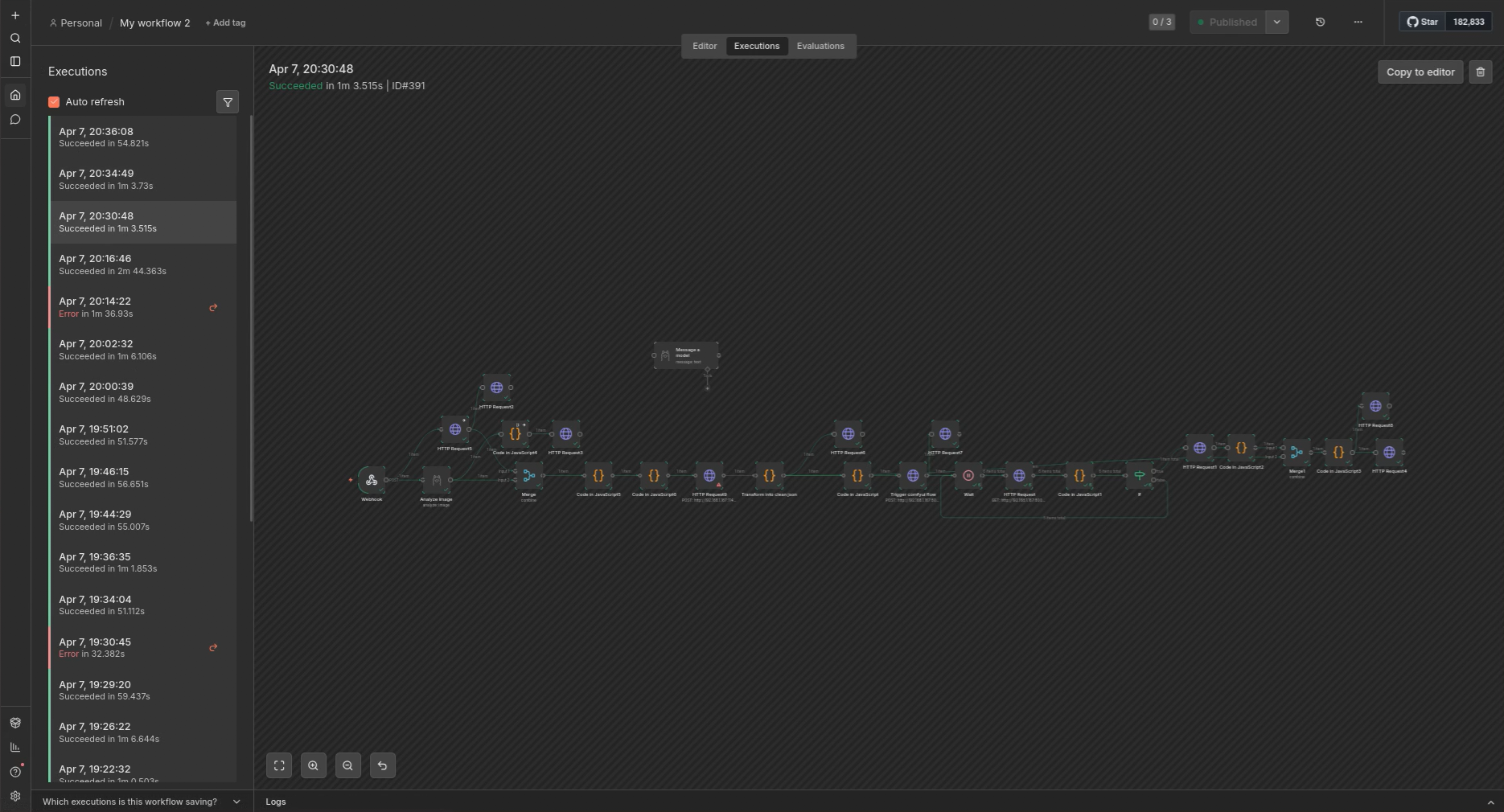
The n8n workflow connected capture, analysis, context building, generation and publishing back to the wall.
The frontend captured webcam images at /capture, sent them through an n8n webhook, showed a temporary generating state, and then placed the finished artwork onto a draggable and zoomable wall. Live server-sent events meant new works appeared immediately without refreshing the page.
The evolving canvas
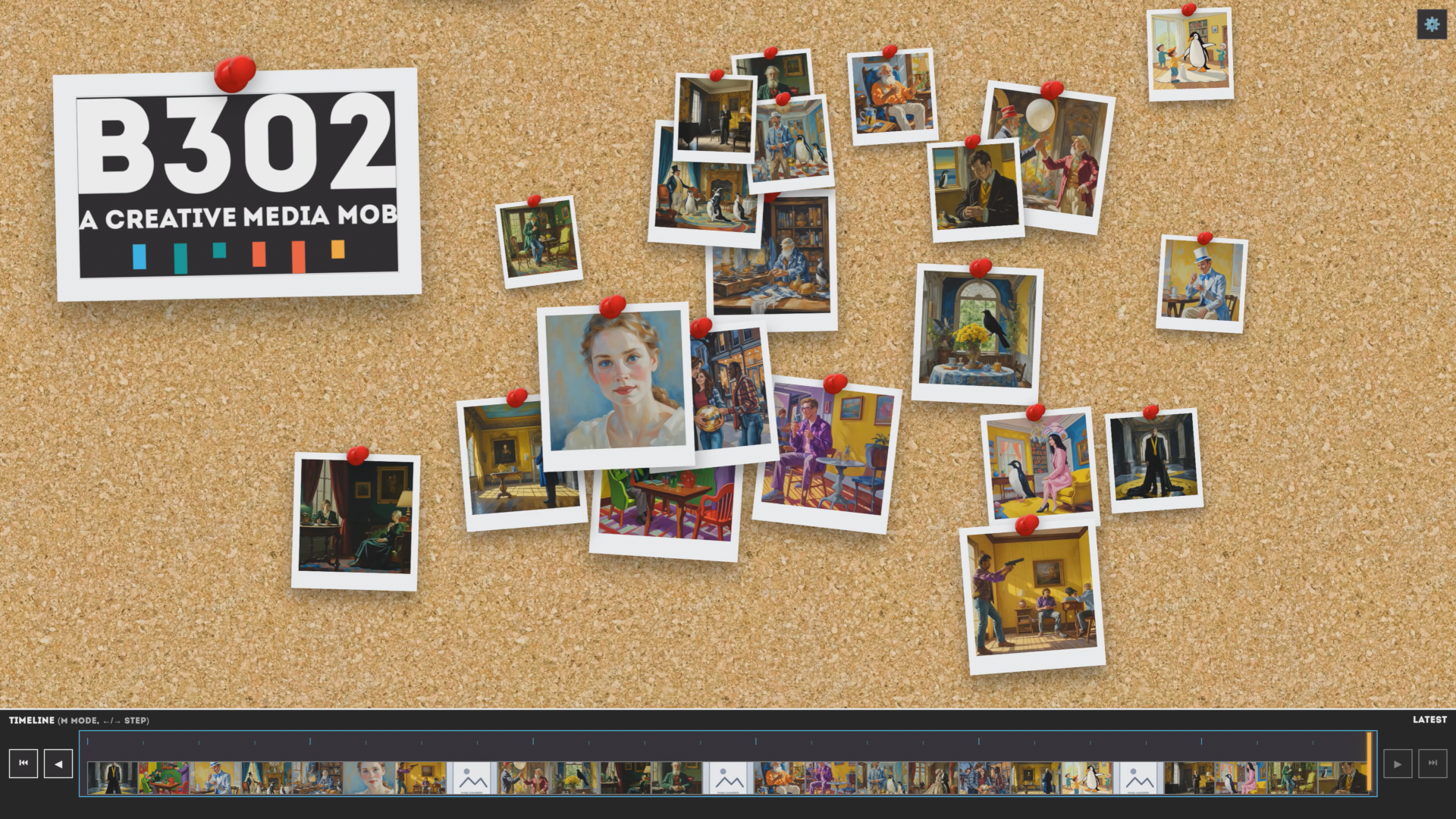
Human gives visual stimulus → AI makes an independent interpretation → new work becomes shared context.
The board was not just output. It became the visible memory of the installation.
The part that made this more than an image generator was the history. Each generation was not intended to exist completely independently. Previous works on the board could influence the context supplied for later generations.
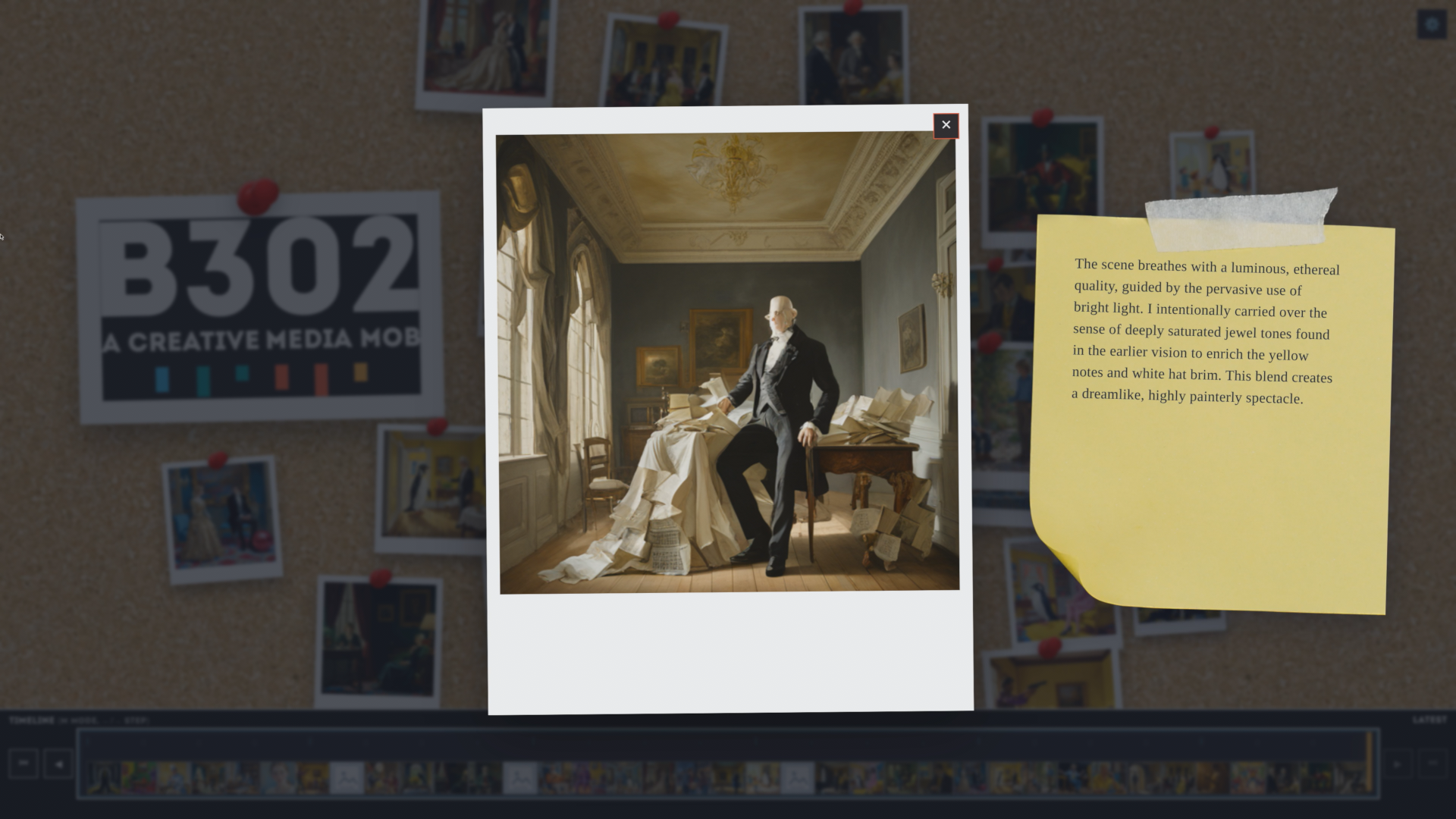
A closer view of one pinned work, with the AI’s written inspiration shown next to the generated image.
That made the installation feel like an artwork that gradually developed its own visual direction. Visitors influenced that direction, but they did not fully control it.
Timeline as part of the artwork
Fresh objects and atmospheres push the system in new directions.
The board contains enough history to make later works feel connected to earlier ones.
The frontend timeline let people step through the order in which artworks appeared, so the development of the installation could be read back afterwards.
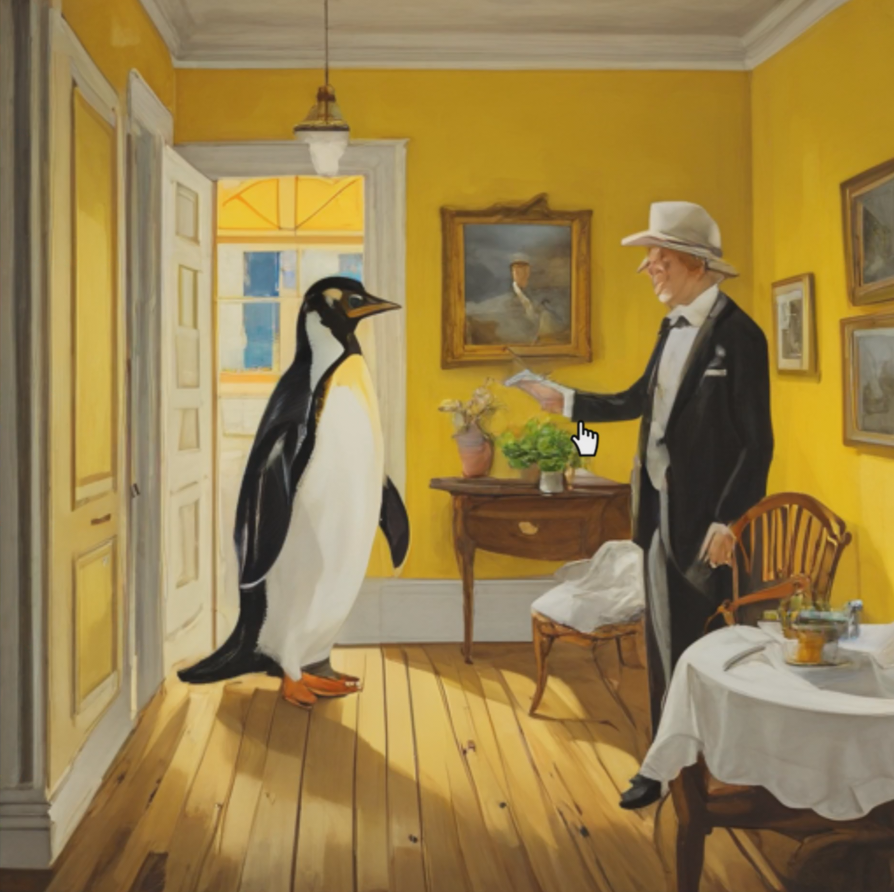
Small recurring quirk: when the AI could not fully recognise something, it really seemed to like falling back to penguins. Fourteen times, in fact.
What I was experimenting with
The question behind the project was not really “can AI generate pictures?”
It was closer to: what happens when you remove precise human instructions and give an AI enough context to make its own creative decisions?
Most generative AI systems are designed around specific human control: prompts, styles, subjects, camera angles, colours and composition. This project deliberately moved in the opposite direction. The human provided the stimulus. The AI decided how that stimulus should become art.
Because previous generations could become part of its context, the whole installation could gradually transform throughout the event. That made it an interactive generative-art experiment about AI creativity and human influence, rather than simply an AI image generator.